
Helical Piers Installation for Foundation Stabilization
Helical piers stabilize foundations by threading steel screw-shaped anchors deep into load-bearing soil, transferring structural weight away from unstable ground. OKC Underground House Repair installs these deep foundation solutions with minimal excavation, addressing cracks, uneven floors, and sticking doors caused by soil movement common across Oklahoma City properties.
Key Takeaways
Helical piers thread into ground, eliminating large excavation work required by standard foundations.
Also called anchors, piles, or screwpiles, helical piers secure new or repair existing foundations.
Helical piles work effectively in challenging soil conditions where traditional foundation methods fail.
Installation ease and minimal site disruption make helical piers the preferred deep foundation solution.
Helical piers thread into ground, eliminating large excavation work required by standard foundations.
Also called anchors, piles, or screwpiles, helical piers secure new or repair existing foundations.
Helical piles work effectively in challenging soil conditions where traditional foundation methods fail.
Installation ease and minimal site disruption make helical piers the preferred deep foundation solution.
What Are Helical Piers For Foundation Repair?
Helical piers installation places steel shafts with screw-like blades deep into the ground to support a structure’s weight. Foundations resting on unstable or shifting soil often need this deep foundation solution, since standard footings cannot always reach load-bearing soil on their own. Property managers and homeowners facing settlement issues frequently turn to piers as a long-term fix rather than a temporary patch.
Unlike traditional methods that demand extensive digging, these piers screw into the earth with minimal excavation. That approach shortens installation time and limits disturbance to surrounding soil. Most importantly, the piers redirect the structure’s load onto stable, load-bearing soil beneath the surface. A process central to foundation underpinning and long-term stability.
How do homeowners know if they need helical pile repair?
Warning signs rarely show up all at once. Watch for:
Cracks forming in walls or floors
Doors or windows that suddenly stick
Floors that feel uneven underfoot
Gaps opening between walls and ceilings
Cracks forming in walls or floors
Doors or windows that suddenly stick
Floors that feel uneven underfoot
Gaps opening between walls and ceilings
Any of these signals foundation movement. Prompt inspection catches problems before they worsen.
What does structural repair accomplish once piers are installed?
Structural repair work restores strength to a foundation that has cracked or settled. Helical pile repair stabilizes the structure by anchoring it to soil that can actually bear the load, halting further movement and protecting the home’s long-term integrity.
How Do Helical Piers Compare To Push Piers?
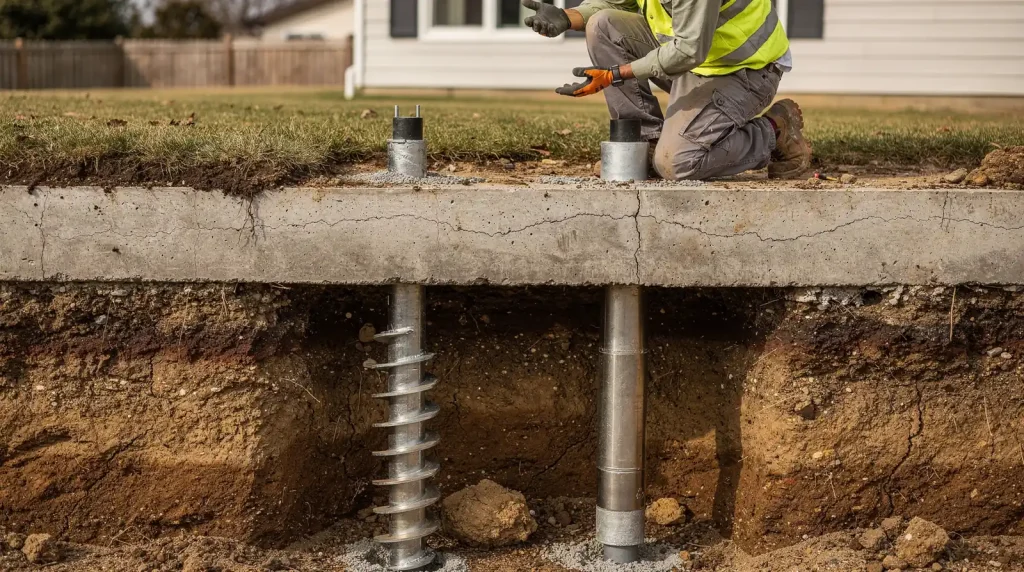
Speed and site disruption separate the two systems most. Push piers rely on the weight of the structure itself to drive steel sections into load-bearing soil. helical piers installation screws steel shafts into the ground using torque, working quickly with minimal disturbance to lawns, driveways, or landscaping. That matters for homeowners with tight side yards or limited access around the foundation.
Soil conditions also tip the decision. Helical piers adapt to a wider range of soil types. Site layouts, making them a flexible choice for foundation underpinning where push piers might struggle. Property managers dealing with unpredictable soil across multiple units often find this versatility reduces guesswork before work even starts.
Is helical pile repair more expensive than push piers?
Cost depends on soil depth, home size, and access, not the pier type alone. Homeowners deserve upfront, transparent pricing before any helical pile repair begins, so the total cost is clear before crews arrive.
Which system fits an active repair project better?
A certified crew following proven inspection-first procedures determines the right system case by case. Every project should start with a detailed site inspection and a written plan, not a one-size-fits-all fix. That approach protects homeowners from shortcuts and surprise costs down the line.
What Happens During Helical Pier Installation?
A qualified crew starts by evaluating soil conditions and the extent of foundation movement before touching a tool. Ground settlement, not surface cracks alone, usually drives the need for repair, so the diagnostic step matters as much as the fix itself. Skipping it risks placing piers in the wrong location entirely.
Does the process start with an inspection?
Yes. A free inspection determines whether helical piers installation or another method fits the specific problem a home is facing. Every project moves forward only after a detailed inspection and a clear written plan. Homeowners know exactly what work will happen and why before crews arrive.
How does foundation underpinning actually get done?
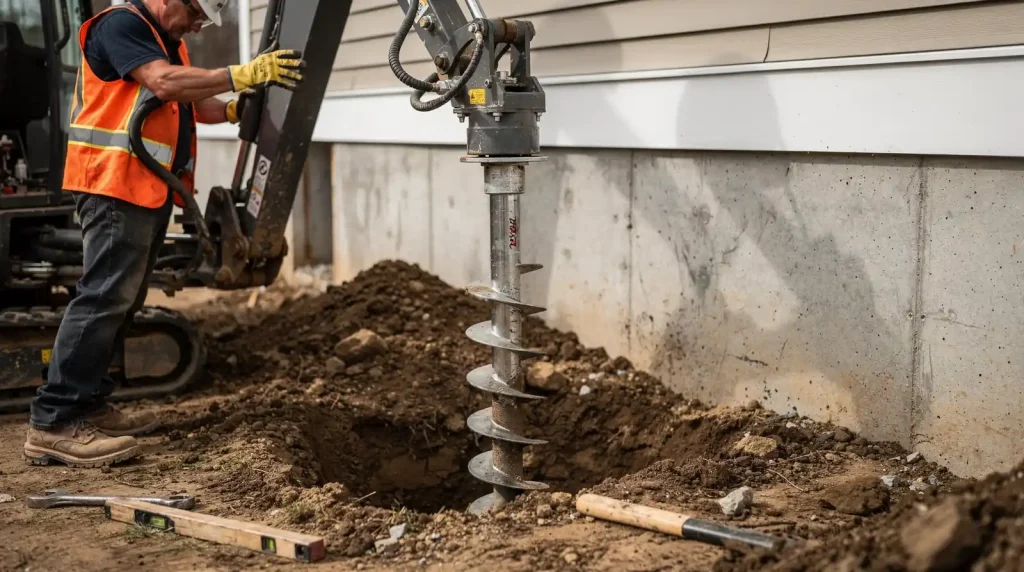
Foundation underpinning involves screwing steel shafts into stable, load-bearing soil beneath the structure. Hydraulic equipment drives each pier to a depth where resistance confirms it can support the home’s weight. Once set, the piers connect to steel brackets under the foundation, and weight transfers gradually from unstable soil to the load-bearing layer.
Typical sequence:
Site inspection and soil assessment
Bracket attachment at foundation footings
Pier installation to load-bearing depth
Load transfer and structural leveling
Site inspection and soil assessment
Bracket attachment at foundation footings
Pier installation to load-bearing depth
Load transfer and structural leveling
Because helical pile repair systems are built for long-term performance, homeowners shouldn’t expect repeat visits for the same settlement issue once the work is complete.
Helical piers represent a proven foundation stabilization solution for Oklahoma’s challenging soil conditions and climate demands. By addressing settlement and structural movement at their source, these engineered systems provide homeowners with lasting protection and peace of mind. The technical precision required for proper installation underscores the importance of engaging qualified professionals who understand both the mechanical principles and regional geological factors. Investing in helical pier technology today safeguards your home’s structural integrity for decades to come.
FAQ
How do helical piers stabilize a foundation?
Steel shafts with screw-like blades thread into the ground. Transfer a structure’s weight onto stable, load-bearing soil beneath the surface, halting movement and restoring integrity.
What signs indicate a home needs helical pile repair?
Warning signs include cracks in walls or floors, sticking doors or windows, uneven floors, and gaps between walls and ceilings, all signaling foundation movement requiring prompt inspection. cite-1
How do helical piers differ from push piers?
Helical piers use torque to screw into soil quickly with minimal disruption. Push piers rely on structural weight to drive steel sections down, and helical piers adapt to more soil types.